Occupational Health and Safety in Ecuador: Employer Obligations in 2026

In this article
- The current legal framework for occupational health and safety in Ecuador
- Obligations that apply to every company
- What changes with company size and risk level
- Health and safety committee or delegate
- What you must register in the SUT
- Risk matrix, training and health surveillance
- Workplace accidents: what to do and by when
- Inspections and penalties
- What about ISO 45001? Voluntary, but useful
- Common mistakes in SMEs
- Occupational health and safety checklist for an SME
Occupational health and safety (OHS) in Ecuador is no longer governed by the 1986 regulation: since May 2024 the core rule has been Executive Decree 255 (Decreto Ejecutivo 255), implemented by Ministerial Agreement MDT-2024-196 (Acuerdo Ministerial MDT-2024-196). In this guide I explain, based on the size and risk level of your company, which safety officers you must appoint, what to register in the SUT (Sistema Único de Trabajo, the Ministry of Labor's online platform), how to respond to a workplace accident and where to start if you run a small or medium-sized business (SME).
The current legal framework for occupational health and safety in Ecuador
Many companies are still working with documents that cite repealed rules, and that is the first thing an inspector notices. These are the pieces that apply today:
- Constitution. Article 326, items 5 and 6, recognizes the right to work in an environment that ensures health, safety, hygiene and well-being, and the right to be reinstated after an accident or illness (text).
- Andean rules. Decisión 584 of the Comunidad Andina (Andean Community) and its implementing regulation, Resolución 957, require comprehensive prevention plans and pre-employment, periodic and exit medical examinations at no cost to the worker (art. 14 of Decisión 584) (Decisión 584, Resolución 957).
- Código del Trabajo (Labor Code). Occupational risks are borne by the employer (art. 38); the employer must ensure conditions that do not endanger workers' health or lives, and workers must follow the prevention measures (art. 410); and every workplace with more than ten workers must have health and safety regulations approved by the Ministerio del Trabajo (Ministry of Labor) and renewed every two years (art. 434) (Código del Trabajo).
- Reglamento de Seguridad y Salud en el Trabajo (Occupational Health and Safety Regulation). Issued by Executive Decree 255 of May 2, 2024, published in the Second Supplement of Registro Oficial (Official Gazette) 554 on May 9, 2024. It sets out the employer's duties, the safety officers required by size and risk level, and the joint health and safety bodies.
- Acuerdo Ministerial MDT-2024-196 (October 9, 2024). It regulates the safety monitor and the safety technician, external services, registrations, inspections and penalties (text). Its annexes include the inspectors' checklist and the Norma Técnica en Seguridad e Higiene del Trabajo (Technical Standard on Occupational Safety and Hygiene).
- IESS (Instituto Ecuatoriano de Seguridad Social, Ecuador's social security institute). Resolución C.D. 513 (Reglamento del Seguro General de Riesgos del Trabajo, the regulation of the general occupational risk insurance) governs accident reporting and benefits; its article 46 was amended by Resolución C.D. 692 of 2025.
- Occupational health. In 2026 the Ministerio de Salud Pública (Ministry of Public Health, MSP) issued the Reglamento de los Servicios Integrales de Salud en el Trabajo (SISAT, regulation on comprehensive occupational health services), Acuerdo Ministerial 00004-2026, which replaces Acuerdo 1404 and provides for phased implementation (MSP announcement).
There are also sector-specific rules: construction has had its own regulation since 2025 (Acuerdo Ministerial MDT-2025-122), which I cover in the guide on safety on construction sites.
Obligations that apply to every company
Under article 15 of Decree 255 and article 4 of Agreement MDT-2024-196, every company with at least one worker must:
- Appoint the people responsible for health and safety and guarantee their independence.
- Identify hazards and assess risks initially and periodically, applying the hierarchy of elimination, substitution, engineering controls, administrative controls and controls on the worker (art. 49 of Decree 255).
- Have a health and safety policy known to all staff, and provide free training on the risks of each job.
- Provide work clothing and PPE at no cost; a uniform does not count as work clothing (art. 4, item 10 of Agreement MDT-2024-196).
- Guarantee pre-employment, periodic, return-to-work and exit medical evaluations at no cost to the worker.
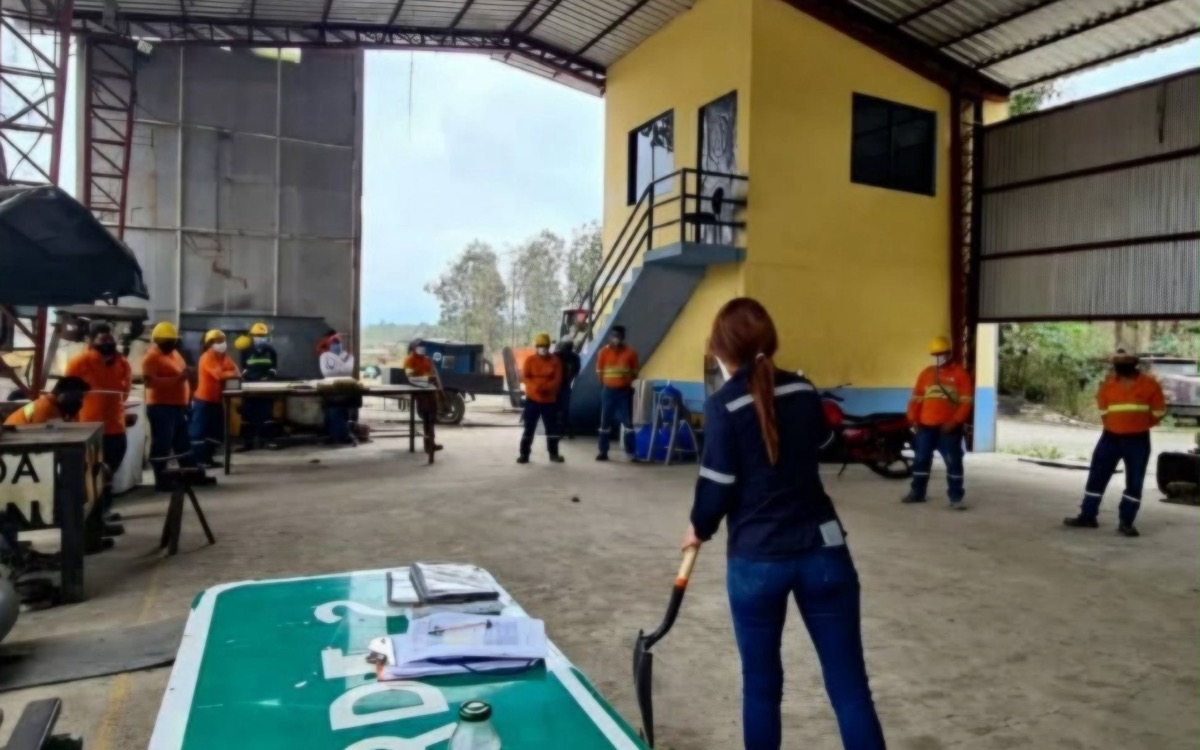
- Have an emergency plan, drills at least once a year and emergency brigades or, if there are not enough staff, an emergency coordinator.
- Investigate accidents and incidents, keep the documentation and report your compliance on the Ministry's platform.
What changes with company size and risk level
The safety officer you need depends on the number of workers per workplace or work site and on the risk level of your activity, which is not up to the company: it is taken from the Ministry of Labor's classification of economic activities (Annex 2 of Agreement MDT-2024-196), based on the activity listed in your RUC (Registro Único de Contribuyentes, your tax registration). The table combines article 18 of Decree 255 with the minimum hours in article 13 of Agreement MDT-2024-196:
| Size | Workers | Risk | Safety officer | Minimum hours |
|---|---|---|---|---|
| Micro | 1 to 9 | Low / medium | Monitor for each workplace | 8 h/month |
| Micro | 1 to 9 | High | Technician | 16 h/month |
| Small | 10 to 49 | Low / medium | Monitor | 16 / 32 h/month |
| Small | 10 to 49 | High | Technician | 48 h/month |
| Medium A | 50 to 99 | Low / medium / high | Technician | 32 / 48 / 64 h/month |
| Medium B | 100 to 199 | All | Technician | Full-time (8 h per day) |
| Large | 200 or more | Low / medium | Technician + one more for every 200 workers | Full-time, per technician |
| Large | 200 or more | High | Technician + one more for every 100 workers | Full-time, per technician |
Monitor or technician: they are not the same
The monitor (monitor de seguridad e higiene del trabajo) is a company employee appointed by the employer who, under article 8 of Agreement MDT-2024-196, must be over 18, have completed secondary school (bachillerato), pass the Ministry's training course for monitors and have a registered addendum to their employment contract; the training is free and must be refreshed every five years. If no one meets the requirements, the work is contracted out to an authorized external service. The technician (técnico de seguridad e higiene del trabajo) is a professional with a bachelor's or postgraduate degree in OHS (art. 20 of Decree 255); those who were already registered without that degree have up to three years from the regulation's publication, that is, until May 2027, to obtain it.
Health staff
Article 18 of Decree 255 requires, for 1 to 99 workers, a physician with a postgraduate qualification in OHS, making periodic visits; from 100 workers, a physician and a nursing professional; from 300, psychology services as well; and from 1,000, a specialist in occupational medicine. The physician cannot also be the monitor or technician for the same employer (art. 23). The new SISAT regulation details how to organize this service; review it with your occupational physician.
Health and safety committee or delegate
- 1 to 9 workers: all workers take part, in coordination with the person responsible for OHS (seguridad y salud en el trabajo, SST) (art. 34).
- 10 to 49: a delegate and an alternate are elected democratically (art. 33).
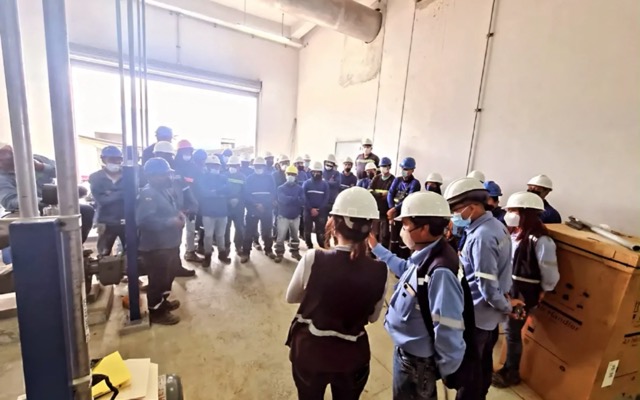
- 50 or more: a joint committee of three worker representatives and three employer representatives, with alternates (art. 32), which serves for two years, meets every two months and holds an extraordinary meeting after an accident.
Their members must pass the Ministry's e-learning course (art. 22 of Agreement MDT-2024-196) and submit an annual activity report by January 31 (art. 39 of Decree 255).
What you must register in the SUT
Obligations are registered in the Sistema Único de Trabajo (SUT), in the health and safety module, with data consistent with your records at the SRI (Servicio de Rentas Internas, the tax authority). Under Agreement MDT-2024-196 (arts. 18 to 20), with their validity periods:
| Obligation | 1 to 10 workers | More than 10 |
|---|---|---|
| OHS officers | 12 months | 12 months |
| Plan de Prevención de Riesgos Laborales (Occupational Risk Prevention Plan) | 12 months | — |
| Reglamento de Higiene y Seguridad (Health and Safety Regulations) | — | 24 months |
| Joint bodies (organismos paritarios) | 12 months | 24 months |
| Health surveillance | 12 months | 12 months |
| Psychosocial risk and alcohol, tobacco and drug programs | — | 12 months |
| Annual training plan | — | 12 months |
| Natural hazards and human-made risks | — | 12 months |
The health and safety regulations follow the official format (guide version 10, July 2026) and are uploaded together with the risk matrix, as a PDF of no more than 2 MB; on renewal, the matrix must show the residual risk. Once they are approved, you have 15 days to download the document and the approval resolution before the system deletes them (art. 19). Give a copy to each worker and keep proof that you did.
Watch the thresholds: a company with exactly 10 workers files a Prevention Plan (the Labor Code requires regulations only when there are more than ten), but it must still elect a delegate, because it falls within the 10-to-49 range. And with 10 or more workers you must register the Protocolo Interno de Prevención de la Discriminación, Violencia y Acoso Laboral (internal protocol for preventing workplace discrimination, violence and harassment; Agreement MDT-2025-102, amended by MDT-2025-186), which has been subject to random checks since July 31, 2026.
Risk matrix, training and health surveillance
What you report in the SUT must be backed by records that are checked during inspections. Decree 255 recognizes six types of risk: physical, chemical, biological, safety, ergonomic and psychosocial (art. 40). The matrix must use a recognized methodology and be updated immediately after an accident or occupational disease, process changes or modifications to the facilities (art. 47); for physical, chemical or biological agents, measurements with calibrated equipment are required.
For example, a hypothetical metalworking shop with 15 workers cannot stop at “risk of impact”: it must assess grinder noise, welding fumes, flying particles and manual handling of loads, each with its own control (machine guards, local exhaust ventilation, task rotation) before falling back on PPE.
Training is repeated when there are new processes, machines or substances, or after an accident. On the health side, the physician decides which examinations are needed and how often, and clinical information is confidential: the employer and the inspectors receive only the occupational health certificate (art. 68 of Decree 255).
Workplace accidents: what to do and by when
- Provide care and transport the worker to a health facility.
- Notify the IESS. The employer must file the accident report within ten business days (término) counted from the accident (art. 44 of C.D. 513), through the IESS online system. For a suspected occupational disease, the term runs from the initial presumptive medical diagnosis (art. 45). Do not wait until the last day.
- Investigate. The safety technician leads the investigation and signs the accident report; update the risk matrix and, if you have a committee, call an extraordinary meeting.
- Maintain the employment relationship while the worker is receiving a temporary disability benefit or an occupational disease is presumed.
If the employer does not report it, the worker, their relatives or third parties may do so, and this does not release the employer from employer liability (responsabilidad patronal) (art. 43 of C.D. 513). And if the worker is not enrolled with the IESS, the employer must compensate them under labor law.
Inspections and penalties
The Ministry inspects using a public checklist, which is your best self-assessment tool. Inspections were preventive only until December 31, 2024; since then they carry penalties, calculated on the basis of the percentage of non-compliance, the size of the company and its risk level (art. 28 of Agreement MDT-2024-196), and for repeat offenses they can be up to double (art. 29). The Ministry can also suspend activities or close the workplace (art. 436 of the Labor Code), and paying the fine does not exempt you from correcting the problem.
What about ISO 45001? Voluntary, but useful
ISO 45001 is the international standard for OHS management systems. In Ecuador it is not mandatory, although a client, a contract or a parent company may require it. And it does not replace the law: a certified company without approved regulations in the SUT, or one that failed to report an accident to the IESS, is still out of compliance. What a good system gives you is that these obligations do not depend on one person's memory.
With a construction company aiming to reach international standards, I took part in implementing and auditing its integrated quality, environment and safety management system, and the lesson is always the same: legal requirements first, certification second. See how I work on ISO and HSE management systems.
Common mistakes in SMEs
- Using a “template” set of health and safety regulations from the internet that does not reflect your real risks or the current format.
- Calculating company size from the company-wide headcount when, for safety officers and joint bodies, each workplace counts separately.
- Letting 12- or 24-month registrations expire because nobody keeps a calendar.
- Confusing uniforms with work clothing, or charging workers for PPE.
- Not downloading the SUT approval resolution in time.
On a construction site the challenge multiplies, because several companies share the same space and coordinating them is as important as any procedure. Agreement MDT-2024-196 requires that, when two or more employers work at the same site, they cooperate and set out the general procedures in writing. You may also find the guides on construction project management and the environmental license useful.
Occupational health and safety checklist for an SME
Compliance is not about piling up paperwork; it is about making sure each document reflects what really happens in your company. If you would like an assessment of where you stand and what is missing, write to me.
Frequently asked questions
Is Executive Decree 2393 of 1986 still in force?
The general regulation now in force is the Reglamento de Seguridad y Salud en el Trabajo (Occupational Health and Safety Regulation), issued by Executive Decree 255 (Registro Oficial, Second Supplement 554, May 9, 2024). That decree repealed any rules that conflict with it, but temporarily kept articles 21 to 184 of the old 1986 regulation (except articles 64, 65 and 67) until the Ministry of Labor issued its technical standards. The Ministry later published the Norma Técnica en Seguridad e Higiene del Trabajo (Technical Standard on Occupational Safety and Hygiene) as an annex to Ministerial Agreement MDT-2024-196. If your safety management still cites Decree 2393 as its main basis, it is time to update it.
Does my company with 6 workers need a safety technician?
It depends on the risk level of your activity. Under Executive Decree 255, a micro-enterprise (1 to 9 workers) with low or medium risk must appoint a safety and hygiene monitor for each workplace; if it is high risk, it needs a safety technician (técnico de seguridad e higiene del trabajo). It must also prepare a Plan de Prevención de Riesgos Laborales (Occupational Risk Prevention Plan) and register it in the SUT.
What is the difference between the Prevention Plan and the Health and Safety Regulations?
Ministerial Agreement MDT-2024-196 requires the Plan de Prevención de Riesgos Laborales from employers with 1 to 10 workers, and it is valid for 12 months. The Reglamento de Higiene y Seguridad (the company's internal Health and Safety Regulations) is mandatory when there are more than 10 workers (article 434 of the Labor Code), is approved through the SUT and must be renewed every two years. In both cases the document must be approved by the Ministry of Labor and given to the workers.
How long do I have to report a workplace accident to the IESS?
IESS Resolution C.D. 513 states that the employer must file the workplace accident report within ten business days (término) counted from the date of the accident, through the IESS online system. For a suspected occupational disease, the ten-business-day term runs from the initial presumptive medical diagnosis. If the employer does not report it, the worker, their relatives or third parties may do so, and that does not release the employer from employer liability (responsabilidad patronal).
Is ISO 45001 certification mandatory in Ecuador?
No. ISO 45001 is a voluntary international standard for OHS management systems. Ecuadorian law does not require certification, although some clients or tenders may ask for it. Certification does not replace your legal obligations either: SUT registrations, appointed safety officers, accident reports to the IESS and the rest.
How long does a health and safety committee or delegate serve?
Under Executive Decree 255, members of the occupational health and safety committee serve for two years and may be re-elected. Agreement MDT-2024-196 provides that the registration of joint bodies (organismos paritarios) is renewed every two years for employers with more than 10 workers and every 12 months for employers with 1 to 10 workers.
Can I outsource safety management to an external company?
Yes. Executive Decree 255 allows private employers to hire external occupational safety and hygiene services, which must be authorized and registered with the Ministry of Labor. The employer remains responsible for compliance and must supervise the service, which has to give the employer a monthly report on the work done.
Official sources
- Constitución de la República del Ecuador (Constitution of Ecuador, art. 326) · Copia publicada por el Ministerio de Defensa Nacional
- Código del Trabajo (Labor Code; Codificación 2005-017, last amended R.O. 309, May 12, 2023) · Ministerio del Trabajo
- Decisión 584 – Instrumento Andino de Seguridad y Salud en el Trabajo (Andean Instrument on Occupational Health and Safety) · Comunidad Andina
- Resolución 957 – Reglamento del Instrumento Andino de Seguridad y Salud en el Trabajo (regulation implementing the Andean Instrument) · Comunidad Andina
- Acuerdo Ministerial MDT-2024-196 – Normas generales para el cumplimiento y control de las obligaciones de SST (general rules on OHS compliance and enforcement) · Ministerio del Trabajo (copia publicada por la Procuraduría UTPL)
- Anexo 3 – Norma Técnica en Seguridad e Higiene del Trabajo (Annex 3 – Technical Standard on Occupational Safety and Hygiene) · Ministerio del Trabajo
- Estructura y guía de elaboración del Reglamento de Higiene y Seguridad, versión 10.0, julio 2026 (structure and drafting guide for the Health and Safety Regulations, version 10.0, July 2026) · Ministerio del Trabajo
- Lista de verificación de cumplimiento de obligaciones de SST, Anexo 1 (OHS compliance checklist, Annex 1) · Ministerio del Trabajo
- Sistema Único de Trabajo (SUT, the Ministry of Labor's online platform) · Ministerio del Trabajo
- Acuerdo Ministerial MDT-2025-186 – Reforma a la norma de prevención de discriminación, violencia y acoso laboral (amendment to the rules on preventing workplace discrimination, violence and harassment) · Ministerio del Trabajo (copia publicada por Teleamazonas)
- Acuerdo Ministerial MDT-2025-122 – Reglamento de seguridad en el trabajo para la construcción (occupational safety regulation for construction) · Ministerio del Trabajo
- Resolución C.D. 513 – Reglamento del Seguro General de Riesgos del Trabajo (regulation of the general occupational risk insurance) · IESS
- Seguro de Riesgos del Trabajo – aviso de accidente (occupational risk insurance: accident reporting) · IESS
- Presentación del Reglamento de los Servicios Integrales de Salud en el Trabajo, SISAT (presentation of the regulation on comprehensive occupational health services) · Ministerio de Salud Pública
This article is for information only and reflects the regulations reviewed as of the update date. It does not replace a review of your specific case or the official text of each regulation. Official Spanish names are kept so you can use them with the authorities; the Spanish version is the reference text.
María Cecilia Mora Barzola
Environmental Engineer · Environmental and OHS consultant
Environmental engineer with more than 8 years of experience in road construction, asphalt plants, mining and industry. Master's in Project Management, International Master's in Building Technology, Rehabilitation and Management, certified ISO 9001, 14001 and 45001 internal auditor, a diploma in occupational health and safety, and a qualified and registered environmental consultant with MAATE (Ministry of Environment, Water and Ecological Transition), registration no. MAE-SUIA-0798-CI. See qualifications and experience · LinkedIn