Construction Project Management in Ecuador: How to Avoid Delays and Cost Overruns


In this article
- Why construction projects in Ecuador run late and over budget
- Construction project management: the controls that actually work
- Public works: what the amended LOSNCP and its Regulations say
- NEC and municipal building permits
- Environment and safety: they are part of the schedule too
- Common mistakes that drive up construction costs
Construction project management in Ecuador is won or lost before the first dump truck moves: in the quality of the designs, in the permits and in a realistic cronograma valorado (cost-loaded schedule). In this guide I review the most common causes of delays and cost overruns, the practical controls that work on site, and the public procurement rules that now govern deadlines, fines and changes.
Why construction projects in Ecuador run late and over budget
Few projects fall behind for a single reason. There is almost always a chain: an incomplete design forces changes, the changes require approvals and, in the meantime, the rains arrive or the cash runs out. These are the causes that come up most often.
1. Incomplete designs and changes during construction
Insufficient soil studies, drawings that have not been coordinated across disciplines, or miscalculated quantities of work cause most changes. Every change costs twice: the additional work and the time it takes to get it approved.
2. Municipal and environmental permits left out of the schedule
The building permit, the environmental authorization or permits to use the public road are often treated as “paperwork” rather than as activities with their own duration. If the schedule starts when the contract is signed and the permit arrives two months later, the project is late from day one.
3. Procurement, suppliers and logistics
Materials with long lead times (steel, equipment, asphalt, precast elements), suppliers without real capacity, or subcontractors who show up late. In rural areas, the distance to quarries and plants multiplies the impact of any failure.
4. Rainy season, access and natural hazards
Rain affects earthworks, paving, concrete pours and access roads. The rainy season varies by region, but it comes back every year, so it has to be planned for. A recent example: in March 2026 the Secretaría Nacional de Gestión de Riesgos (National Risk Management Secretariat) declared orange and yellow alerts in several provinces due to increased rainfall and landslides (Resolución SNGR-022-2026, published in the Registro Oficial (Official Gazette), Supplement No. 241).
5. Cash flow and payments
A contractor without liquidity cuts back on staff and equipment, and the work slows down. On public works, advance payments, approval of planillas (progress payment applications) and payment deadlines are a critical part of planning.
6. Weak planning and lack of control
Schedules put together just to “tick the box” in the bid, with no critical path and no baseline to measure against. As a result, problems are discovered when it is already too late to fix them cheaply.
Construction project management: the controls that actually work
You don't need expensive software, just discipline with a few tools used every week.
WBS: breaking the project into parts you can control
The Work Breakdown Structure (WBS, or EDT in Spanish) divides the project into deliverables: earthworks, base course, asphalt surface course, drainage, signage, environmental management and safety. If the WBS matches the line items (rubros) in the budget, physical and financial progress can be compared directly.
Cost-loaded schedule and critical path
The cronograma valorado assigns each activity its duration and its cost. On it you identify the critical path: the activities with no float, where every day of delay pushes back final delivery. Include in that network the milestones it depends on: permits, design approval, equipment arrival, release of the land for the works.
S-curve and earned value
The S-curve shows the cumulative planned cost over time. Earned value compares it with what has actually been executed and spent:
| Indicator | What it measures | How to read it |
|---|---|---|
| Planned value (PV) | Cost of the work that should have been completed to date | The baseline |
| Earned value (EV) | Budgeted cost of the work actually performed | Actual progress, in money |
| Actual cost (AC) | What was actually spent | Actual spending |
| Schedule index (EV ÷ PV) | Rate of progress | Below 1: behind schedule |
| Cost index (EV ÷ AC) | Spending efficiency | Below 1: overspending |
For example, a hypothetical USD 400,000 project should have had USD 120,000 of work executed by month four (PV), but measured progress is worth USD 96,000 (EV) and USD 110,000 has already been spent (AC). The indices are 0.80 and 0.87: the project is behind schedule and overspending. Spotting this in month four leaves room to correct course.
Change control
Every change in scope, design or quantities should follow the same process: written request, analysis of the impact on cost and time, approval, and update of the baseline. Verbal changes are the main source of disputes at final settlement; on public works they also have legal limits.
Risk register
A table listing each risk, its probability, its impact, the planned response and an owner. The typical risks are already known: rain, permits, payments, clashes with utility networks, finds during excavation, conflicts with the community. Reviewing it every two weeks is worth more than drafting it perfectly once.
Weekly report and supplier management
One page a week is enough: physical progress versus plan, critical activities, open issues with a target resolution date, pending changes and new risks. For suppliers, prequalify them before awarding, get delivery dates in writing for critical-path materials, and have an alternative for key inputs.
Public works: what the amended LOSNCP and its Regulations say
If your project is a public work, or you are a government contractor, the framework changed recently. The Ley Orgánica Reformatoria a la Ley Orgánica del Sistema Nacional de Contratación Pública (the law amending the Organic Law of the National Public Procurement System, known as the LOSNCP) was published in the Registro Oficial, Fourth Supplement No. 140, on October 7, 2025, and the new Reglamento General (General Regulations) was issued by Decreto Ejecutivo N.º 193 (Executive Decree No. 193; Registro Oficial, Ninth Supplement No. 153, October 28, 2025), amended by, among others, Decreto Ejecutivo N.º 461 of July 2026. Check the consolidated version with amendments published by SERCOP (Servicio Nacional de Contratación Pública, the national public procurement agency), and which rules govern your contract based on its start date. The most relevant points for time and cost:
Contract administrator and fiscalizador
The law provides that the administrador del contrato (contract administrator) and the fiscalizador (supervising engineer) are responsible for taking the necessary measures for the proper execution of the contract, in strict compliance with its clauses, schedules, deadlines and costs, and that in works contracts a fiscalizador or supervision team shall be appointed, which resolves technical disputes in the first instance (LOSNCP, art. 92). Under the Reglamento, the fiscalizador keeps the libro de obra (site logbook), reviews and approves the planillas, and may not take more than 15 business days to issue planillas or rulings (Reglamento General, art. 362). In addition, public entities must respond in writing to the contractor's requests within a period not exceeding 10 business days (LOSNCP, art. 81). Every request should be made in writing and dated.
Time extensions and suspensions
An extension is not automatic. It applies at the contractor's reasoned request, due to objective circumstances beyond its control that could not be foreseen when the contract was signed; the request goes to the contract administrator, with a copy to the fiscalizador, within 15 days of the events, with evidence and showing that there are no alternative means to finish within the contract period; it is granted for a period equal to the duration of the circumstance, and never to expand or modify the subject matter of the contract (Reglamento General, arts. 356 and 357). If the request arrives late, it is rejected. For its part, a suspension of the contract period is declared by the entity with stated reasons and, after 60 days of continuous suspension, the entity must proceed to terminate the contract (arts. 356 and 358, as amended by Decree 461). Document events on the same day (site logbook, photos, correspondence).
Delay penalties
Every contract must include a penalty clause. For unjustified delays, the Reglamento provides for a fine for each day of delay of 1 per 1,000 of the value of the unfulfilled obligation, as set out in the tender documents (pliegos); on works it is calculated on the delay attributable to the corresponding planilla (Reglamento General, art. 375; LOSNCP, art. 82 no. 4). Before imposing it, the administrator must issue a reasoned report and give the contractor five business days to present a defense; no fines apply in cases of fortuitous event or force majeure duly proven and accepted by the entity (art. 376). A good site logbook and an up-to-date schedule are your best defense.
Price adjustment
Contracts paid on a unit-price basis are subject to reajuste de precios (price adjustment) using indices from INEC (the national statistics institute); it does not apply, among other cases, to integrated fixed-price contracts (contratos integrales por precio fijo) or when the term is less than 60 days within the same fiscal year (LOSNCP, arts. 96 and 97). A detail few people take into account: if the delay is attributable to the contractor, it is only paid the adjustment calculated with the indices for the period in which it should have performed under the current schedule (Reglamento General, art. 385). In other words, falling behind also reduces your price adjustment.
Supplementary contracts, quantity differences and work orders
This is the main limit on cost overruns in public works:
| Mechanism | Limit | Legal basis |
|---|---|---|
| Difference in quantities of work (without a supplementary contract) | Up to 5% of the main contract | LOSNCP, art. 102 |
| Work orders (cost plus percentage, new line items) | Up to 2% of the main contract | LOSNCP, art. 103 |
| Supplementary contracts (contratos complementarios) | Up to 8% of the main contract | LOSNCP, art. 101 |
| Combined total for works | Up to 15%; exceptionally up to 35% with a favorable report from the Contraloría (Comptroller General's Office) | LOSNCP, art. 101 |
If those percentages are exceeded or there is no favorable report, the entity's highest authority must terminate the contract and start a new procurement process (LOSNCP, art. 101). In addition, amending addenda may not alter the subject matter of the contract or increase the price or the term (art. 83). Poor studies are not fixed “with supplementary contracts”: the quality of the preliminary studies is the best investment against cost overruns.
Payments
Following the July 2026 amendment, payments must be made within a maximum of two months from fulfillment of the requirements set out in the contract clause; if payment is not made on time, undue withholding is presumed and the contractor may claim interest and damages (Reglamento General, art. 378, as amended by Decree 461). At the same time, if the entity unjustifiably delays payments, it cannot demand progress on the contract, and that delay is attributable to the entity (LOSNCP, art. 82 no. 6). Plan your cash flow with that horizon in mind and keep track of the dates on which planillas are submitted and approved.
Projects with development-bank financing: BDE and the IDB
Many local projects are financed through the Banco de Desarrollo del Ecuador (BDE), Ecuador's public development bank, which lends to the gobiernos autónomos descentralizados (GAD, Ecuador's decentralized local governments), and some with funds from a multilateral organization, the Inter-American Development Bank (IDB, BID in Spanish). The LOSNCP provides that, in procurement financed under a prior agreement by multilateral lending organizations, the terms of the respective agreement apply, and that agreement defines whether the organization's rules or Ecuadorian law are used (LOSNCP, art. 2).
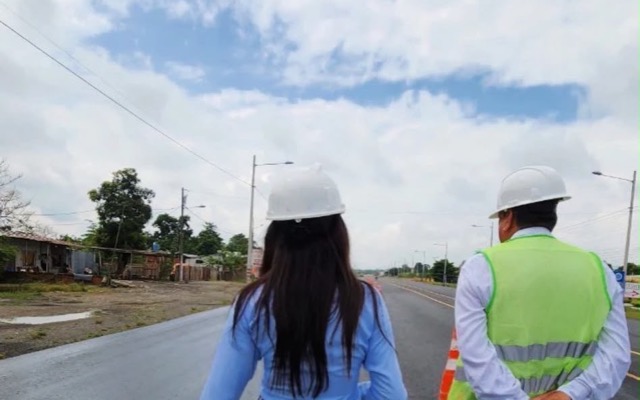
This kind of financing usually comes with its own environmental and social requirements. The IDB applies an Environmental and Social Policy Framework with ten performance standards (including labor conditions, community health and safety, and stakeholder engagement) to its new investment operations. On the rehabilitation and paving of the Puente Negro – Vainillo road, I worked on environmental and safety management in coordination with government agencies, BDE and the IDB. When several institutions are involved, reports and approvals must be scheduled as activities with deadlines, because they can also bring the work to a halt.
NEC and municipal building permits
The Norma Ecuatoriana de la Construcción (NEC, Ecuadorian Construction Code) is the country's technical reference. Decreto Ejecutivo N.º 705 (Executive Decree No. 705) of 2011 provided that the NEC set out the minimum requirements for designing, building and controlling the execution of works, and its executive committee is now chaired by the Ministerio de Infraestructura y Transporte (Ministry of Infrastructure and Transport), following the merger of MIDUVI (the former housing and urban development ministry) ordered by Decreto Ejecutivo N.º 102. The NEC is organized into chapters on structural safety (NEC-SE), habitability and health (NEC-HS) and basic services (NEC-SB), plus recognized documents (NEC-DR); the design must comply with those that apply to your project.
The building permit is issued by the municipality. The Ley Orgánica de Ordenamiento Territorial, Uso y Gestión de Suelo (Organic Law on Land-Use Planning and Management, art. 8) states that the right to build is granted upon final approval of the building permit, provided that municipal or metropolitan urban planning, national construction standards and risk-prevention standards are met. Each GAD has its own ordinance, requirements and timelines, so it is advisable to:
- Check the urban planning regulations for the plot (permitted uses, setbacks, heights) at the outset, before finalizing the design.
- Submit complete, coordinated drawings to avoid rounds of review comments.
- Allow a realistic time for municipal review, confirmed with the cantón (municipality) where the project is located.
- Plan for any additional permits the GAD requires for the type of work.
Environment and safety: they are part of the schedule too
Environmental and occupational health and safety (OHS) obligations directly affect the timeline. A project without the appropriate environmental authorization, processed with the national environmental authority (MAATE, currently the Ministerio de Ambiente y Energía, Ministry of Environment and Energy), is exposed to review findings and stoppages. If you need guidance, see my guide to getting an environmental license in Ecuador and my explanation of the Plan de Manejo Ambiental (Environmental Management Plan), whose measures must be budgeted and scheduled.
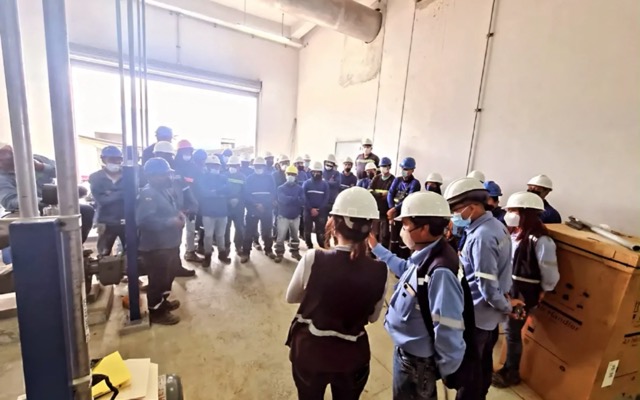
The same goes for safety: a serious accident or an inspection with findings can shut down work areas for days (see my articles on safety on construction sites and occupational health and safety). Include explicit line items for environment and OHS (signage, protective equipment, monitoring, training): if they are not budgeted, they end up as cost overruns or simply don't get done.
An integrated management system (quality, environment and safety) demands the same things that reduce delays: clear procedures, records and periodic review. You can see my ISO and HSE management systems service.
Common mistakes that drive up construction costs
- Tendering or contracting with incomplete studies, counting on fixing things later through changes or supplementary contracts.
- A schedule without a baseline: if it is rescheduled every month without keeping a record, you never know how far behind you really are.
- Not documenting: without a site logbook, signed minutes and written correspondence, a justified extension can be lost for lack of evidence or because it was filed late.
- Treating permits as parallel paperwork instead of predecessor activities.
- Measuring only spending and not progress: spending 50% of the budget does not mean 50% of the work is done.
If you need support planning or controlling your project, see my project management service or get in touch.
Frequently asked questions
What is a cronograma valorado (cost-loaded schedule) and what is it used for?
It is the works schedule in which each activity or line item (rubro) is assigned its cost and its execution period. It shows how much money should have been invested by each date, lets you build the S-curve and compare what was planned with what was actually executed and paid. In Ecuador it is a standard tool on both public and private projects.
How much can a public works contract grow through changes?
Under the LOSNCP as amended in October 2025, contratos complementarios (supplementary contracts) may not exceed 8% of the value of the main contract; differences in quantities of work can reach 5% and work orders 2%. For works, the combined total may not exceed 15%, except in exceptional cases with a favorable report from the Contraloría (Comptroller General's Office), up to 35%. Always check the current text of the law and the contract.
When can you request a time extension on a public contract?
The Reglamento General (General Regulations) of the LOSNCP states that an extension (prórroga) applies at the contractor's reasoned request, due to objective circumstances beyond its control that could not be foreseen when the contract was signed. The request goes to the contract administrator, with a copy to the fiscalizador (supervising engineer), within 15 days of the events, with evidence and showing that there are no alternative means to finish on time.
What is the difference between the contract administrator and the fiscalizador?
The administrador del contrato (contract administrator) ensures that all contractual obligations are met and makes administrative decisions, such as fines or extensions. The fiscalizador (supervising engineer), mandatory in works contracts, controls technical execution on site, keeps the libro de obra (site logbook) and reviews the planillas (progress payment applications). Both are responsible for the proper execution of the contract.
Is the Norma Ecuatoriana de la Construcción (NEC) mandatory?
The NEC (Ecuadorian Construction Code) sets the minimum requirements for designing, building and controlling works, and the Ley de Ordenamiento Territorial (Land-Use Planning Law) ties the building permit to compliance with national construction standards. In practice, municipalities review designs against the NEC and their own ordinances, so not complying usually leads to review comments and delays.
How do environmental and safety permits affect the schedule?
If the environmental authorization or the health and safety measures are not ready at the start, the project may not be able to begin, or may be stopped later. The recommended approach is to include them in the schedule as activities with their own duration, owners and float, not as a parallel paperwork track to be sorted out along the way.
Is earned value worth using on a small project?
Yes, in a simplified version. All you need is a cost-loaded schedule and a monthly record of physical progress and actual costs to calculate two indices: whether you are spending more than planned and whether you are progressing more slowly than planned. A spreadsheet is enough to get started.
Official sources
- Ley Orgánica Reformatoria a la Ley Orgánica del Sistema Nacional de Contratación Pública (law amending the Organic Law of the National Public Procurement System; Registro Oficial, Fourth Supplement No. 140, October 7, 2025) · Asamblea Nacional del Ecuador
- Decreto Ejecutivo N.º 193: Reglamento General de la LOSNCP (Executive Decree No. 193: General Regulations of the LOSNCP; Registro Oficial, Ninth Supplement No. 153, October 28, 2025) · Registro Oficial (repositorio de la Corte Constitucional del Ecuador)
- Reglamento General de la LOSNCP (General Regulations of the LOSNCP), consolidated version with amendments (last amended July 30, 2026) · Servicio Nacional de Contratación Pública (SERCOP)
- Decreto Ejecutivo N.º 461 (Executive Decree No. 461): amendments to the Reglamento General de la LOSNCP (July 29, 2026) · Servicio Nacional de Contratación Pública (SERCOP)
- Registro Oficial (Official Gazette), Supplement No. 241 (March 11, 2026): Resolución MIT-VDUSV-2026-0001-R (NEC Executive Committee) and Resolución SNGR-022-2026 · Registro Oficial (repositorio de la Corte Constitucional del Ecuador)
- Decreto Ejecutivo N.º 102 (Executive Decree No. 102): merger of MIDUVI into the Ministerio de Transporte y Obras Públicas (Ministry of Transport and Public Works) · Gobierno del Ecuador (gob.ec)
- Environmental and Social Policy Framework · Banco Interamericano de Desarrollo (BID)
- Banco de Desarrollo del Ecuador B.P. (Development Bank of Ecuador) · BDE
This article is for information only and reflects the regulations reviewed as of the update date. It does not replace a review of your specific case or the official text of each regulation. Official Spanish names are kept so you can use them with the authorities; the Spanish version is the reference text.
María Cecilia Mora Barzola
Environmental Engineer · Environmental and OHS consultant
Environmental engineer with more than 8 years of experience in road construction, asphalt plants, mining and industry. Master's in Project Management, International Master's in Building Technology, Rehabilitation and Management, certified ISO 9001, 14001 and 45001 internal auditor, a diploma in occupational health and safety, and a qualified and registered environmental consultant with MAATE (Ministry of Environment, Water and Ecological Transition), registration no. MAE-SUIA-0798-CI. See qualifications and experience · LinkedIn